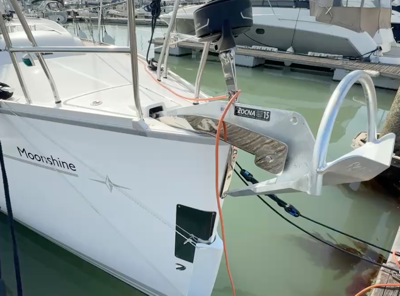
It seems that every few months I discover something else on the boat that should be part of a maintenance schedule - its a never ending saga. Sometimes I'm reading an article in a sailing magazine that has a catastrophic failure of some system or component and I come over in a cold sweat and realised we have never checked that particular 'thing'. Sometimes its common sense or a chat with another boat owner. But wherever the 'inspiration' strikes from, its a never ending list...
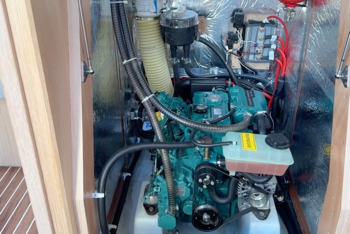
There are a couple of constants that even amatuer boat owners like ourselves understand need regular attention. The first is the engine. We've had the guys at Apex Engineer service our marine diesel each year until we get more confident to do it ourselves. Our son is a char mechanic so hopefully we'll start getting him to help with this - until now with it being new we've used marine engineers. As we have tried to impress upon our son, its not like a car where you can pull over by the roadside and join the RAC if it stops working... So we have been pretty careful to get the engine serviced regularly.
The other area is 'anti fouling'. The coating of special paint that tries to deter all manner of sea life from attaching and growing on the bottom of our boat. It needs regular replacement as it gradually gets 'washed' off. As its on the bottom of the boat it means we have to get Moonshine strapped to a crane and put on the hard standing to have this work done. We keep her in the water through the winter - I've read opinions on both sides of that debate, but for us its important to be able to come and use her as a floating caravan whenever we want - and we have heating on board so its nice that we can stay on board at a weekend whenever we want. So we get her lifted out for a couple of weeks to get the anti-fouling applied.
The 2025 Maintenance Round
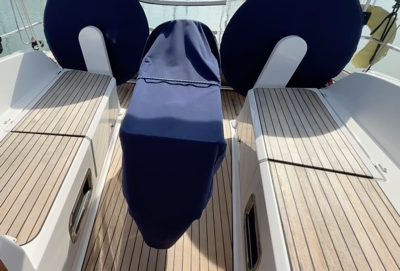
OK, so what about this year? Well aside from the above we did have a couple of bits more done. I had a small mishap in a French Marina where I got a bit of a scrape from the propellor of a small motorboat. It wasn't easy to spot the scratch, but knowing it was there and not wanting it to develop into anything worse we decided to get it filled in and the hull polished. We also had some sea water leaking in the engine bay so the Apex guys swapped that pump out and also adjusted the engine to get it running more smoothly. And we had professional help with one other thing - we had our Genoa laundered and patched up. We'll do the main sail next year (I'm thinking we alternate them so they get a professional clean every other year and we get to spread the cost!)
And then there is the work that we did on her ourselves...
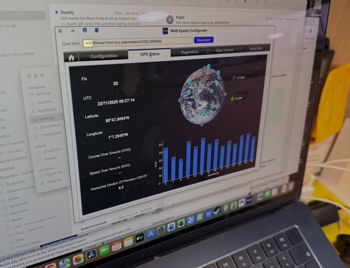
There were some minor jobs like adding a perspex cover to the table top, cleaning out the water tanks, organising and moving all our spares and tools, and cleaning, brightening and oiling all the Teak decking. On the electronics side we added a new piece of hardware called an Orca - it helps track our position and lets us plan routes with more accuracy on our iPads as well as showing boat instrument data whenever we want on our phones. This might ease the constant questions we have for each other when we are on a trip - "what's the wind speed, direction, boat speed, speed over ground" etc etc etc.
The other job was getting our B&G AIS working. What a faff that was. Its a system that receives details of other boat's locations and directions of travel, and also sends ours out. And it was the sending part that stopped working. Its a system not all boats have, but it gives us a little bit more peace of mind when we are sailing at night - the idea that hopefully any big ships will get an electronic warning if they ar likely to collide with us - and we would get the same of course. The system uses GPS and our VHF antennna - so there are a couple of components that could cause it to fail. I'll leave the technicl details out of this (message me if you are a sailor struggling with yours) but suffice to say working out which component is at fault was a long job. A lot of testing. Frustratingly everything seemed OK - our actual AIS hardware even worked correctly at B&G's office on their test rig. After several months we simply bought a replacement unit - it turned out that a chip somewhere inside it must have stopped working because now we are back to normal.
What we Didn't Do
As we sat at anchor last year we ended up with quite a list of great upgrades for Moonshine - nearly all of which we haven't done due to the high costs. We might do some of these - but we decided to gather a bit more evidence before spending on them. Each one of these would be around the £5000 mark to get it done professionally - just to give you a very rough idea of the order of magnitude.
- Davits - These let your tender remain inflated and accessible but out of the water so it doesn't get so mucky! The design of the rear of our boat with its swim platform doesn't make Davits the quickest or easiest of upgrades. There are ways to do it - but we are going to leave that one for now...
- Solar Arch - This would let us move our solar panel from the deck to somewhere up and out of the way behind us. Stainless steel arches built to fit the specifics of your boat seem eye wateringly expensive...
- Tent - A full enclosure rather than just the shade of a bimini was another idea we had - mostly when we were shivering back in England! But as we want to try and do even warmer weather sailing we decided that could wait until we want to cruise through Scotland...
- Fore Sail - we would like the option of a different or additional sail at the front of Moonshine to help us get more speed and sail more often when the wind is behind us. There are a few ways to do this and we were quite close to getting one. In the end we decided that we would gather more data this year by logging the wind angles to work out which of the different sail types would give us the most use.